

In short: BPC-157 is a synthetic 15-amino-acid peptide, described in 1993 as a fragment of a protein from human gastric juice. Its published research is almost entirely cell and animal work, most of it from one research group, with no completed controlled human trial. In Australia it is an unapproved peptide product, and WADA prohibits it in sport.
This review covers what the published literature on BPC-157 contains, who produced it and where its limits are. Studies are labelled cell, animal or human, as explained in how to read a peptide study, and findings are reported as their authors described them. For a related compound, see BPC-157 vs TB-500.
Key facts
| Property | Value |
|---|---|
| Name and synonyms | BPC-157; BPC 157; BPC157; Bepecin; PL 14736; PLD-116; PL-10 1 |
| Sequence and length | Gly-Glu-Pro-Pro-Pro-Gly-Lys-Pro-Ala-Asp-Asp-Ala-Gly-Leu-Val (GEPPPGKPADDAGLV), 15 residues |
| Molecular formula | C62H98N16O22 |
| Molecular weight | 1419.5 g/mol (computed by PubChem for the free peptide) |
| CAS number | 137525-51-0 |
| PubChem CID | 9941957 |
| Compound class | Synthetic linear peptide (a pentadecapeptide, meaning 15 amino acids) |
| Evidence base | Mainly animal (rodent) and cell studies; three small uncontrolled human reports; no completed controlled human trial with published results |
| WADA status | Prohibited at all times under section S0, non-approved substances (2026 Prohibited List) |
| TGA status | Not included in the Australian Register of Therapeutic Goods (ARTG); named as an example of an unapproved peptide product in the TGA safety advisory of 13 April 2026 |
What is BPC-157?
BPC-157 is a synthetic peptide of 15 amino acids whose sequence was described as a fragment of a larger protein found in human gastric juice. In a 1993 overview, Sikiric and colleagues at the University of Zagreb described a gastric juice protein with a relative molecular mass of about 40,000, which they named BPC, and a 15-amino-acid fragment, BPC 157, that they characterised and described as “thought to be essential for its activity” 2.
BPC stands for “body protection compound”; a 2011 cell study from Chang Gung University in Taiwan described BPC 157 as a partial sequence of that gastric juice protein 3. A 2025 review describes BPC-157 as a synthetic pentadecapeptide 4, and a 2022 study from Xi’an, China, reported establishing a solid-phase synthesis process for it 5.
The peptide also appears under development codes. A 2006 review from the Zagreb group described BPC 157 as being in trials for inflammatory bowel disease under the codes PL-10, PLD-116 and PL 14736, with the Croatian company Pliva 6. Searches of Europe PMC and ClinicalTrials.gov for the code PL 14736, run for this review, found no published or posted results from those trials.
How is BPC-157 structured?
BPC-157 is a linear chain of 15 amino acid residues with a free amino group at the start (the N-terminus) and a free carboxylic acid group at the end (the C-terminus). PubChem records it in line notation as H-GEPPPGKPADDAGLV-OH, with the formula C62H98N16O22 and a computed molecular weight of 1419.5 g/mol 1.
The sequence also shows:
- Four prolines. Three sit together at positions 3 to 5, and a fourth at position 8.
- Charged side chains. There are three acidic residues (glutamate at position 2 and aspartates at positions 10 and 11) and one basic residue (lysine at position 7).
- No cysteine. With no cysteine residues, the chain has no disulfide bonds (sulfur bridges that some peptides use to form rings).
PubChem gives a monoisotopic mass (calculated from the most common isotope of each element) of 1418.704 Da for the free peptide, and lists a trifluoroacetate salt among its synonyms 1. Why salts matter is covered in acetate vs TFA salts and net peptide content.
The Zagreb group calls the compound a “stable gastric pentadecapeptide” 6. Other laboratories add detail: an anti-doping laboratory in Salt Lake City reported that it remained stable in urine for at least four days 7, while the Xi’an group reported that labelled BPC-157 was rapidly broken down in rats into small peptide fragments and amino acids 5.
What mechanisms have researchers studied?
Researchers have mainly studied BPC-157’s links to the nitric oxide system, to signalling that controls blood vessel formation, and to migration and receptor signalling in tendon cells. These are mechanisms proposed from cell, tissue and animal models; none has been established in people.
Nitric oxide (NO). NO is a small signalling molecule that, among other roles, relaxes blood vessels. In a 1997 rat and tissue study, Sikiric et al. reported that BPC 157 generated NO in rat stomach tissue homogenates to a similar extent as L-arginine (the amino acid used to make NO), and that this was not blocked by L-NAME, an inhibitor of NO production 8. Using isolated rat aorta and endothelial cells (the cells lining blood vessels), Hsieh et al. reported in 2020 relaxation of the aorta that depended on the endothelium and on NO, and increased phosphorylation (addition of phosphate groups, a common signalling switch) of Src, caveolin-1 and eNOS, the enzyme that makes NO in vessel walls 9.
Blood vessel formation. Angiogenesis is the growth of new blood vessels. In a 2017 study using a chick embryo membrane assay, endothelial cells and a rat model of reduced blood flow to the hind limb, Hsieh et al. reported increased vessel density, faster recovery of blood flow, and increased expression and activation of VEGFR2, a receptor for vascular endothelial growth factor 10.
Tendon cells. Fibroblasts are the cells that produce connective tissue. In rat Achilles tendon explants and fibroblasts, Chang et al. reported faster cell outgrowth, better survival under oxidative stress and increased migration, with increased phosphorylation of FAK and paxillin (proteins that anchor moving cells), but no direct effect on proliferation 3. A follow-up study found increased growth hormone receptor mRNA and protein in the same cell type 11.
Early gene expression. Researchers at the Pliva Research Institute reported in 2007 that the peptide increased expression of egr-1, an “early growth response” gene, in Caco-2 cells, a human intestinal cell line 12.
 Illustration: a short peptide chain drawn as beads, one per amino acid residue. It does not show the actual structure of BPC-157.
What does the published research include?
The published research on BPC-157 is mainly rodent injury models and cell studies, plus reviews, preclinical toxicology and pharmacokinetic work, analytical chemistry papers and three small human reports.
A Europe PMC search run for this review on 28 September 2026 returned 224 PubMed-indexed records that mention BPC-157 in the title or abstract. Of these, 174 (about 78%) list P. Sikiric of the University of Zagreb as an author 13. A 2025 systematic review limited to musculoskeletal research identified 544 records and included 36 studies: 35 preclinical studies and one clinical study 14.
The table shows a selection of primary studies across study types, from the Zagreb group, the company Pliva and independent laboratories in Taiwan, China and the United States.
| Study | Study type | Model | What was measured | Reported finding |
|---|---|---|---|---|
| Staresinic, 2003 | Animal and cell | Rats with a transected Achilles tendon; cultured tendon cells | Load to failure, functional index, microscopy, cell growth | Higher load to failure and functional index values, and more fibroblast and collagen formation, than controls |
| Tkalcevic, 2007 | Animal and cell | Rat sponge implant model; excisional wounds in diabetic db/db mice; Caco-2 cells | Granulation tissue, collagen organisation, egr-1 expression | Stimulated granulation tissue (new connective tissue) and early collagen organisation; increased egr-1 and nab2 expression |
| Chang, 2011 | Cell and tissue explant | Rat Achilles tendon explants and fibroblasts | Outgrowth, survival, migration, FAK and paxillin signalling | Faster outgrowth, higher survival under stress, more migration; no direct effect on proliferation |
| Hsieh, 2017 | Cell and animal | Chick embryo membrane; human endothelial cells; rat hind limb with reduced blood flow | Vessel density, blood flow, VEGFR2 signalling | Increased vessel density and blood flow recovery; increased VEGFR2 expression and activation |
| Xu, 2020 | Animal toxicology | Mice, rats, rabbits and dogs | Single and repeated exposure toxicity, local tolerance, genetic and embryo-fetal toxicity | Reported no serious toxicity findings in these animal studies; a fall in blood creatinine in one dog group, which recovered two weeks after exposure stopped |
| He, 2022 | Animal pharmacokinetics | Rats and beagle dogs, including tritium-labelled peptide | Pharmacokinetics, distribution, metabolism, excretion | Rapid breakdown into small fragments and amino acids; urine and bile were the main excretion routes |
| Cox, 2017 | Analytical | Confiscated vials; plasma and urine in vitro | Identification, metabolism, detection in urine | Identified BPC 157 in confiscated vials; validated a urine detection method |
Most animal studies compared animals given BPC-157 with untreated controls after an injury the researchers created. Each reference gives the full methods.
What are the limits of the evidence?
The main limits are that the evidence is almost entirely preclinical, most of it comes from one research group, and the human data consist of three small uncontrolled reports.
Concentration in one group. About four in five indexed records list the same author 13. A 2019 review from Loughborough University noted that most studies used small rodent models, that efficacy had not been confirmed in humans, and that only a handful of groups had studied the peptide in depth 17. Results from one laboratory can reflect its particular methods, which is why independent replication matters.
Animal models. Rodent injury models differ from human injury or disease, and a finding in a rat does not show that the same happens in a person; see why most peptide research is preclinical.
Human data. A 2025 narrative review counted only three pilot studies in humans 4. All three were published by the same first author in one journal, and none had a control group:
- a 2021 retrospective chart review with telephone follow-up of 16 patients at a single site, which used no standardised outcome measures 18;
- a 2024 pilot study of 12 participants at a single site 19;
- a 2025 pilot study of two participants 20.
The 2025 systematic review found no clinical safety data 14.
Registered trials. A ClinicalTrials.gov search on 28 September 2026 found four studies that list BPC-157, and none had posted results 21. One of them is from a sponsor whose other registry record describes itself as a fictional example, so it is not listed here:
- NCT02637284, a placebo-controlled phase 1 study registered in 2015, last updated in December 2015, with unknown status;
- NCT07752381, a single-arm study of a commercial product containing BPC-157, marked completed;
- NCT07803250, a phase 1 trial registered in 2026 and not yet recruiting.
What is BPC-157’s regulatory and anti-doping status in Australia?
BPC-157 is not an approved medicine in Australia, and it is prohibited in sport at all times.
TGA. The Therapeutic Goods Administration’s safety advisory of 13 April 2026 names BPC-157 as an example of an unapproved peptide product: goods not included in the ARTG, which the advisory says the TGA has not evaluated for safety, quality or effectiveness 22.
WADA. BPC-157 is named in section S0 (non-approved substances) of the World Anti-Doping Agency (WADA) Prohibited List, and has been named there since the 2022 List 23. The 2026 List, in effect from 1 January 2026, prohibits S0 substances at all times, in and out of competition, and classes them as Specified Substances 24. The US Anti-Doping Agency publishes a plain-language explainer 25.
Sport Integrity Australia. Sport Integrity Australia, which applies the World Anti-Doping Code in Australia 26, states on its BPC-157 page that a therapeutic use exemption would not be granted for BPC-157 27. The status of other research peptides is set out in our anti-doping status table by compound.
How is BPC-157 characterised in the lab?
Like other synthetic peptides, BPC-157 is identified by mass spectrometry, and its purity is measured by high-performance liquid chromatography (HPLC).
Identity. Mass spectrometry measures the mass of the molecule and compares it with the theoretical value, a monoisotopic mass of 1418.704 Da for BPC-157 1. Fragmenting the peptide inside the instrument can also confirm the order of its amino acids.
Purity. HPLC separates the peptide from related impurities, such as incomplete sequences from synthesis, and reports the main peak as a percentage of the total.
Detection in biological samples. Anti-doping laboratories have published urine methods. The Sports Medicine Research and Testing Laboratory in Salt Lake City suggested measuring a metabolite alongside the parent peptide to improve specificity 7, and a 2023 study from the Shanghai Anti-Doping Laboratory used isotope-labelled BPC-157 and high-resolution mass spectrometry to find nine metabolites in laboratory incubations, then validated a urine method for BPC-157 and five of them 28.
A batch certificate of analysis brings the identity and purity results together. Our guide on how to read a peptide COA explains each section, and published batch reports are listed in our COA library. For sealed lyophilised (freeze-dried) material, see how to store lyophilised peptides.
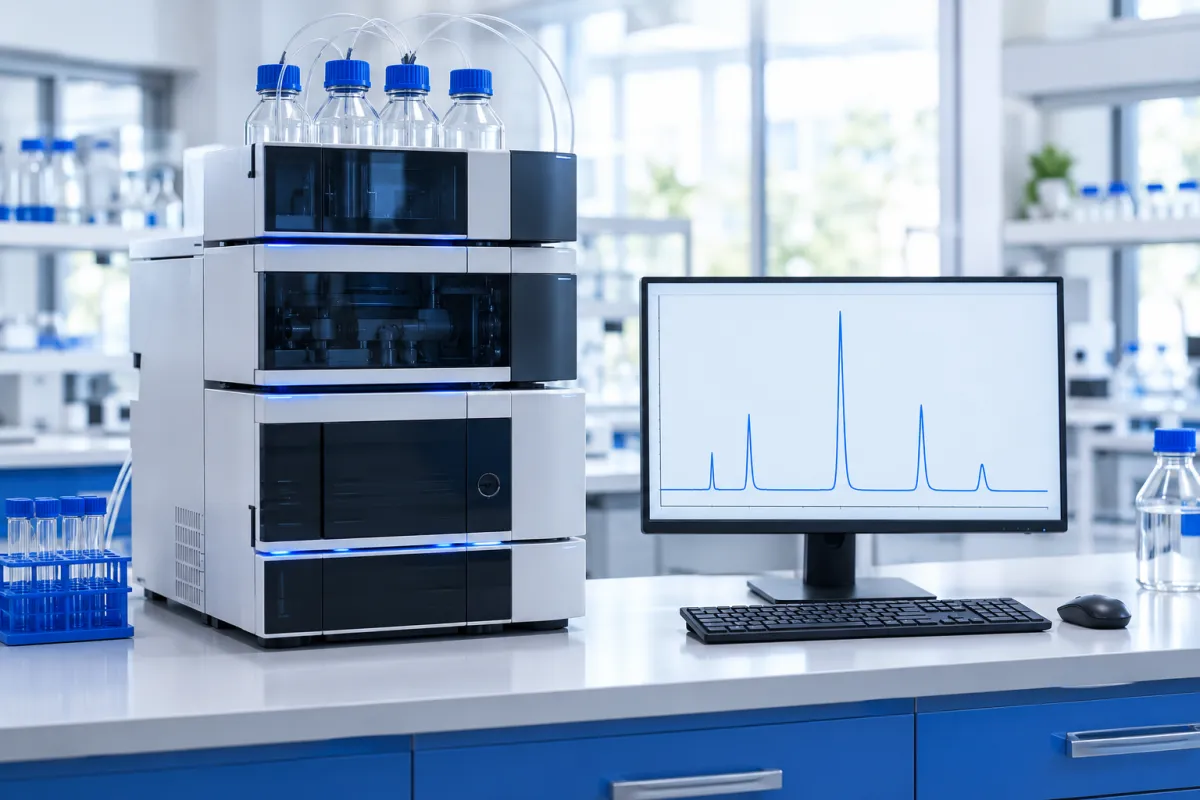 Illustration: an HPLC system with a chromatogram on screen, the kind of instrument used to measure peptide purity.
Frequently asked questions
What does BPC stand for in BPC-157?
BPC stands for “body protection compound”. Sikiric and colleagues used the name BPC for a protein they isolated from human gastric juice, and BPC 157 for a 15-amino-acid fragment of it that they characterised in 1993 2. Later authors, including a 2011 tendon cell study from Taiwan, describe BPC 157 as a partial sequence of that gastric juice protein 3.
What are the molecular formula and weight of BPC-157?
PubChem (CID 9941957) lists BPC-157 as C62H98N16O22, with a computed molecular weight of 1419.5 g/mol and a monoisotopic mass of 1418.704 Da for the free peptide, and gives its CAS number as 137525-51-0 1. Salt forms, such as the trifluoroacetate in PubChem’s synonym list, weigh more per mole because the counter-ion is included; see acetate vs TFA salts.
Has BPC-157 been tested in human clinical trials?
No controlled human trial of BPC-157 had posted results by 28 September 2026. ClinicalTrials.gov lists four studies, none with posted results: a 2015 phase 1 study with unknown status, a completed single-arm study of a commercial product, and a trial registered in 2026 that had not yet started recruiting 21. A 2025 systematic review found one clinical study among the 36 it included, and no clinical safety data 14.
Is BPC-157 prohibited in sport?
Yes. BPC-157 is named in section S0 (non-approved substances) of the WADA Prohibited List, which prohibits it at all times, in and out of competition 24. It has been named there since the 2022 List 23. Sport Integrity Australia states that a therapeutic use exemption would not be granted for it 27. Our anti-doping status table covers other research peptides.
Is BPC-157 approved by the TGA?
No. BPC-157 is not included in the Australian Register of Therapeutic Goods. The TGA’s safety advisory of 13 April 2026 names BPC-157 as an example of an unapproved peptide product, meaning goods not included in the ARTG, and states that such products have not been evaluated by the TGA for safety, quality or effectiveness 22.
How is the identity of BPC-157 confirmed in a laboratory?
Identity is usually confirmed by mass spectrometry, which compares the measured mass with the theoretical monoisotopic mass of 1418.704 Da listed by PubChem 1. HPLC then separates the peptide from impurities to estimate purity. Anti-doping laboratories have also validated methods for detecting BPC-157 and its metabolites in urine 28. Our guide to reading a peptide COA explains how these results are reported.
References
- PubChem. BPC-157, compound summary (CID 9941957). National Center for Biotechnology Information. https://pubchem.ncbi.nlm.nih.gov/compound/9941957, accessed 28 September 2026. [chemical database]
- Sikirić P, Petek M, Rucman R, et al. A new gastric juice peptide, BPC. An overview of the stomach-stress-organoprotection hypothesis and beneficial effects of BPC. J Physiol Paris. 1993;87(5):313-327. doi:10.1016/0928-4257(93)90038-u. PMID: 8298609. [narrative review]
- Chang CH, Tsai WC, Lin MS, et al. The promoting effect of pentadecapeptide BPC 157 on tendon healing involves tendon outgrowth, cell survival, and cell migration. J Appl Physiol (1985). 2011;110(3):774-780. doi:10.1152/japplphysiol.00945.2010. PMID: 21030672. [cell and tissue explant study]
- McGuire FP, Martinez R, Lenz A, et al. Regeneration or Risk? A Narrative Review of BPC-157 for Musculoskeletal Healing. Curr Rev Musculoskelet Med. 2025;18(12):611-619. doi:10.1007/s12178-025-09990-7. PMID: 40789979. PMCID: PMC12446177. [narrative review]
- He L, Feng D, Guo H, et al. Pharmacokinetics, distribution, metabolism, and excretion of body-protective compound 157, a potential drug for treating various wounds, in rats and dogs. Front Pharmacol. 2022;13:1026182. doi:10.3389/fphar.2022.1026182. PMID: 36588717. PMCID: PMC9794587. [animal pharmacokinetic study]
- Sikiric P, Seiwerth S, Brcic L, et al. Stable gastric pentadecapeptide BPC 157 in trials for inflammatory bowel disease (PL-10, PLD-116, PL 14736, Pliva, Croatia). Full and distended stomach, and vascular response. Inflammopharmacology. 2006;14(5-6):214-221. doi:10.1007/s10787-006-1531-7. PMID: 17186181. [narrative review]
- Cox HD, Miller GD, Eichner D. Detection and in vitro metabolism of the confiscated peptides BPC 157 and MGF R23H. Drug Test Anal. 2017;9(10):1490-1498. doi:10.1002/dta.2152. PMID: 28035768. [analytical method study]
- Sikirić P, Seiwerth S, Grabarević Z, et al. The influence of a novel pentadecapeptide, BPC 157, on N(G)-nitro-L-arginine methylester and L-arginine effects on stomach mucosa integrity and blood pressure. Eur J Pharmacol. 1997;332(1):23-33. doi:10.1016/s0014-2999(97)01033-9. PMID: 9298922. [rodent and tissue study]
- Hsieh MJ, Lee CH, Chueh HY, et al. Modulatory effects of BPC 157 on vasomotor tone and the activation of Src-Caveolin-1-endothelial nitric oxide synthase pathway. Sci Rep. 2020;10(1):17078. doi:10.1038/s41598-020-74022-y. PMID: 33051481. PMCID: PMC7555539. [ex vivo tissue and cell study]
- Hsieh MJ, Liu HT, Wang CN, et al. Therapeutic potential of pro-angiogenic BPC157 is associated with VEGFR2 activation and up-regulation. J Mol Med (Berl). 2017;95(3):323-333. doi:10.1007/s00109-016-1488-y. PMID: 27847966. [cell, chick embryo and rodent study]
- Chang CH, Tsai WC, Hsu YH, et al. Pentadecapeptide BPC 157 enhances the growth hormone receptor expression in tendon fibroblasts. Molecules. 2014;19(11):19066-19077. doi:10.3390/molecules191119066. PMID: 25415472. PMCID: PMC6271067. [cell study]
- Tkalcević VI, Cuzić S, Brajsa K, et al. Enhancement by PL 14736 of granulation and collagen organization in healing wounds and the potential role of egr-1 expression. Eur J Pharmacol. 2007;570(1-3):212-221. doi:10.1016/j.ejphar.2007.05.072. PMID: 17628536. [rodent, mouse and cell study]
- Europe PMC. Search of PubMed-indexed records mentioning BPC-157 in the title or abstract, run with and without the author filter “Sikiric P”. https://europepmc.org/search?query=%28TITLE_ABS%3A%22BPC%20157%22%20OR%20TITLE_ABS%3A%22BPC-157%22%20OR%20TITLE_ABS%3A%22BPC157%22%29%20AND%20SRC%3AMED, accessed 28 September 2026. [literature search]
- Vasireddi N, Hahamyan H, Salata MJ, et al. Emerging Use of BPC-157 in Orthopaedic Sports Medicine: A Systematic Review. HSS J. 2025;21(4):485-495. doi:10.1177/15563316251355551. PMID: 40756949. PMCID: PMC12313605. [systematic review]
- Staresinic M, Sebecic B, Patrlj L, et al. Gastric pentadecapeptide BPC 157 accelerates healing of transected rat Achilles tendon and in vitro stimulates tendocytes growth. J Orthop Res. 2003;21(6):976-983. doi:10.1016/s0736-0266(03)00110-4. PMID: 14554208. [rodent and cell study]
- Xu C, Sun L, Ren F, et al. Preclinical safety evaluation of body protective compound-157, a potential drug for treating various wounds. Regul Toxicol Pharmacol. 2020;114:104665. doi:10.1016/j.yrtph.2020.104665. PMID: 32334036. [animal toxicology study]
- Gwyer D, Wragg NM, Wilson SL. Gastric pentadecapeptide body protection compound BPC 157 and its role in accelerating musculoskeletal soft tissue healing. Cell Tissue Res. 2019;377(2):153-159. doi:10.1007/s00441-019-03016-8. PMID: 30915550. [narrative review]
- Lee E, Padgett B. Intra-Articular Injection of BPC 157 for Multiple Types of Knee Pain. Altern Ther Health Med. 2021;27(4):8-13. PMID: 34324435. [retrospective case series]
- Lee E, Walker C, Ayadi B. Effect of BPC-157 on Symptoms in Patients with Interstitial Cystitis: A Pilot Study. Altern Ther Health Med. 2024;30(10):12-17. PMID: 39325560. [uncontrolled pilot study]
- Lee E, Burgess K. Safety of Intravenous Infusion of BPC157 in Humans: A Pilot Study. Altern Ther Health Med. 2025;31(5):20-24. PMID: 40131143. [uncontrolled pilot study, two participants]
- ClinicalTrials.gov. Records NCT02637284, NCT07752381 and NCT07803250, found by searching for BPC-157, BPC 157 and PL 14736, accessed 28 September 2026. [trial registry]
- Therapeutic Goods Administration. Understanding your responsibilities when importing, compounding and supplying unapproved peptide products (safety advisory, 13 April 2026). https://www.tga.gov.au/safety/safety-monitoring-and-information/safety-alerts/understanding-your-responsibilities-when-importing-compounding-and-supplying-unapproved-peptide-products, accessed 28 September 2026. [regulator]
- World Anti-Doping Agency. WADA publishes 2022 Prohibited List (news release, 30 September 2021). https://www.wada-ama.org/en/news/wada-publishes-2022-prohibited-list, accessed 28 September 2026. [anti-doping agency]
- World Anti-Doping Agency. The Prohibited List (2026 Prohibited List, in effect from 1 January 2026). https://www.wada-ama.org/en/prohibited-list, accessed 28 September 2026. [anti-doping standard]
- US Anti-Doping Agency. BPC-157: what athletes should know about the prohibited experimental peptide. https://www.usada.org/spirit-of-sport/bpc-157-peptide-prohibited/, accessed 28 September 2026. [anti-doping agency]
- Sport Integrity Australia. Anti-doping. https://www.sportintegrity.gov.au/what-we-do/anti-doping, accessed 28 September 2026. [anti-doping agency]
- Sport Integrity Australia. BPC-157 information. https://www.sportintegrity.gov.au/what-we-do/anti-doping/substance-education/bpc-157, accessed 28 September 2026. [anti-doping agency]
- Tian T, Jing J, Li Y, et al. Stable Isotope Labeling-Based Nontargeted Strategy for Characterization of the In Vitro Metabolic Profile of a Novel Doping BPC-157 in Doping Control by UHPLC-HRMS. Molecules. 2023;28(21):7345. doi:10.3390/molecules28217345. PMID: 37959764. PMCID: PMC10650108. [analytical method study]
Reference material. Certified Research Peptides supplies BPC-157 for laboratory research, with a batch certificate of analysis: BPC-157.
Check the lab report
Every published certificate of analysis names its lab, lot and test date. For laboratory research use only.