


In short: SS-31, also called elamipretide, is a synthetic four-residue peptide that concentrates in the inner mitochondrial membrane and binds the lipid cardiolipin. Its record includes cell and animal studies and more than 20 registered human trials. The US FDA granted it accelerated approval in 2025 for Barth syndrome. It has no ARTG entry in Australia.
This review sets out what has been studied for SS-31, how its trials were designed and how its regulatory status developed. Our guide to how to read a peptide study explains those labels. For a comparison with a mitochondrial-derived peptide, see MOTS-c vs SS-31 compared.
Key facts
| Property | Value |
|---|---|
| Name and synonyms | SS-31; elamipretide (international nonproprietary name); MTP-131; Bendavia; Szeto-Schiller peptide 14 |
| US brand name | Forzinity (elamipretide hydrochloride), NDA 215244 21 |
| Sequence and length | D-Arg-Dmt-Lys-Phe-NH2, 4 residues; Dmt is 2′,6′-dimethyl-L-tyrosine and the C-terminus is an amide 14 |
| Molecular formula | C32H49N9O5 14 |
| Molecular weight | 639.8 g/mol (free base) 14 |
| CAS number | 736992-21-5 14 |
| PubChem CID | 11764719 |
| Compound class | Synthetic aromatic-cationic tetrapeptide 7; described in the FDA label as a mitochondrial cardiolipin binder 16 |
| Evidence base | Cell, animal and ex vivo human tissue studies; registered phase 1 to phase 4 human trials |
| WADA status | Not named in the 2026 Prohibited List; check the current WADA Prohibited List 19 |
| TGA status | No entry in the Australian Register of Therapeutic Goods (ARTG search, 28 September 2026) 20 |
What is SS-31?
SS-31 is a laboratory-designed peptide of four amino acids, developed to accumulate in mitochondria, the compartments inside cells that produce most of the cell’s chemical energy. It belongs to the Szeto-Schiller (SS) peptides 3; Szeto and Schiller are authors of the 2004 paper that described the series 1.
In a 2004 study of this peptide class, Zhao et al. described cell-permeable peptides built on alternating aromatic and basic amino acids, and reported that they concentrated about 1,000-fold in the inner mitochondrial membrane 1. The compound was later developed under the names MTP-131, Bendavia and elamipretide by Stealth BioTherapeutics, the sponsor of most registered trials and the holder of the US new drug application 15 17.
Unlike MOTS-c, a mitochondrial-derived peptide encoded in mitochondrial DNA, SS-31 is made synthetically; see solid-phase peptide synthesis explained.
How is SS-31 structured?
SS-31 has the sequence D-Arg-Dmt-Lys-Phe-NH2 14. Three features set it apart from a typical short peptide:
- A D-amino acid. The first residue is D-arginine, the mirror-image form of the arginine found in proteins.
- A modified tyrosine. Dmt (2′,6′-dimethyltyrosine) carries two extra methyl groups on its ring. Zhao et al. reported that analogues of these peptides lacking dimethyltyrosine did not reduce mitochondrial reactive oxygen species 1.
- An amidated C-terminus. The chain ends in an amide (NH2) rather than a free acid.
The alternating pattern of positively charged residues (arginine, lysine) and ring-containing aromatic residues (Dmt, phenylalanine) is why trial reports describe it as an aromatic-cationic tetrapeptide 7. PubChem gives its molecular formula as C32H49N9O5 and its molecular weight as 639.8 g/mol 14. The US medicine contains the hydrochloride salt 21.
 Illustration: a four-unit peptide chain beside a stylised membrane, not the exact structure of SS-31.
What mechanisms have researchers studied?
Most mechanism work on SS-31 concerns its binding to cardiolipin, an anionic phospholipid of the inner mitochondrial membrane that is needed to form the folded membranes (cristae) where ATP is made 2.
- Early antioxidant framing. In the 2004 study of the SS peptide series, Zhao et al. reported lower reactive oxygen species and less cell death in neuronal cells. In isolated mitochondria they reported less reactive oxygen species production and inhibition of the permeability transition (the opening of a pore in the inner membrane) and of swelling 1.
- Cardiolipin binding. In a 2013 study, Birk et al. used a fluorescent analogue of SS-31 to report high-affinity binding to cardiolipin. They also reported that the SS-31 and cardiolipin complex inhibited the peroxidase activity of cytochrome c, an activity that damages cardiolipin during ischaemia 2.
- Membrane surface charge. In a 2020 biophysical and computational study, Mitchell et al. reported that SS-31 sits in the surface region of lipid membranes, with binding that tracked the membrane’s surface charge. It changed lipid packing and surface electrical charge without destabilising the membrane 3.
- Protein neighbours. Chavez et al. used chemical cross-linking with mass spectrometry to identify proteins that SS-31 contacts in mitochondria. All were known cardiolipin-binding proteins, involved either in ATP production by oxidative phosphorylation or in 2-oxoglutarate metabolism 4.
- Cristae structure. In a 2020 rat heart study, Allen et al. reported less fragmentation of cristae networks after ischaemia-reperfusion with elamipretide, although the fall in cardiolipin content was not prevented 24.
The FDA label describes elamipretide as a mitochondrial cardiolipin binder that localises to the inner mitochondrial membrane 16. Mitchell et al. proposed several non-exclusive mechanisms rather than a single one 3, and all of the mechanism work above comes from cells, isolated mitochondria, model membranes or animals.
What does the published research include?
The SS-31 record has two parts: preclinical studies and a series of company-sponsored human trials. When searched on 28 September 2026, ClinicalTrials.gov listed 30 records naming elamipretide, MTP-131, SS-31 or Bendavia as an intervention, 28 of them sponsored by Stealth BioTherapeutics 17.
Preclinical studies
| Study | Study type | Model | What was measured | Reported finding |
|---|---|---|---|---|
| Zhao 2004 | Cell, mitochondria and ex vivo heart study (SS series) | Neuronal cells; isolated mitochondria; isolated heart | Reactive oxygen species, cell death, swelling, contractile force | Lower reactive oxygen species, cell death and swelling, and higher contractile force; analogues without Dmt lacked these effects |
| Kloner 2012 | Animal and cell study | Sheep, rabbit and guinea pig heart ischaemia-reperfusion models | Infarct size, no-reflow area, heart function | Smaller infarcts in sheep and guinea pig models and less no-reflow in rabbits; recovery of heart function was not affected |
| Birk 2013 | Biochemical and rat study | Binding assays; rats with kidney ischaemia | Cardiolipin binding, cristae structure, ATP recovery | High-affinity cardiolipin binding, protected cristae and faster ATP recovery after reperfusion |
| Sabbah 2016 | Dog study | 14 dogs with induced heart failure, randomised to elamipretide or saline for 3 months | Ejection fraction, blood biomarkers, heart cell mitochondrial function | Ejection fraction rose in treated dogs and fell in controls; mitochondrial respiration and ATP synthesis reported as restored |
| Chatfield 2019 | Ex vivo human tissue study | Explanted failing and non-failing heart tissue | Oxygen flux, complex I and IV activity | Higher oxygen flux and complex I and IV activity in failing tissue exposed to elamipretide |
| Mitchell 2020 | Biophysical and computational study | Model membranes; isolated mitochondria | Membrane binding, lipid packing, surface charge | Binding tracked surface charge; SS-31 changed surface electrostatics without destabilising the bilayer |
| Chavez 2020 | Cross-linking mass spectrometry study | Mitochondria | Proteins chemically cross-linked to SS-31 | Interacting proteins were all known cardiolipin binders, involved in oxidative phosphorylation or 2-oxoglutarate metabolism |
| Allen 2020 | Rat study | Rat hearts after ischaemia-reperfusion | Respiratory complex activity, 3D cristae structure, cardiolipin | Smaller losses of complex I, II and IV activity and less cristae fragmentation; the fall in cardiolipin was not prevented |
Registered human trials
Selected trials are described by design and endpoints only; results are in the cited publications and registry records.
| Trial (registry) | Phase and design | Population | Primary endpoints | Registry status |
|---|---|---|---|---|
| EMBRACE STEMI (NCT01572909) 5 | Phase 2a, randomised, double-blind, placebo-controlled | Adults with a first anterior ST-elevation myocardial infarction undergoing primary coronary intervention | Infarct size by creatine kinase-MB area under the curve over 72 hours | Completed |
| PROGRESS-HF (NCT02788747) 6 | Phase 2, randomised, double-blind, placebo-controlled | Adults with stable heart failure with reduced ejection fraction | Change in left ventricular end-systolic volume at week 4, by cardiac MRI | Completed |
| MMPOWER (NCT02367014) 7 | Phase 1/2, randomised, double-blind, placebo-controlled, stepwise escalation | 36 adults with genetically confirmed primary mitochondrial myopathy | Change in distance on the 6-minute walk test after 5 days | Completed |
| MMPOWER-3 (NCT03323749) 8 | Phase 3, randomised, double-blind, placebo-controlled | 218 adults with primary mitochondrial myopathy | 6-minute walk test and a fatigue score (PMMSA) at 24 weeks | Terminated |
| TAZPOWER (NCT03098797) 9 | Phase 2/3, randomised, double-blind, placebo-controlled crossover, then open-label extension | 12 people with genetically confirmed Barth syndrome | 6-minute walk test and a Barth syndrome symptom assessment (BTHS-SA) fatigue score | Completed |
| ReCLAIM-2 (NCT03891875) 10 | Phase 2, randomised, double-masked, placebo-controlled | 176 adults aged 55 or older with dry age-related macular degeneration | Change in low-luminance visual acuity, and change in geographic atrophy area by OCT | Completed |
| NuPower (NCT05162768) | Phase 3, randomised, double-blind, placebo-controlled | 102 people with mitochondrial disease from nuclear DNA mutations | 6-minute walk test | Completed; no results posted |
| ReNEW (NCT06373731) | Phase 3, randomised, double-masked, placebo-controlled | 313 people with dry age-related macular degeneration | Rate of change in macular area of photoreceptor loss at week 48 | Active, not recruiting |
| 4TAZPower (NCT07531251) 18 | Phase 3b/4, randomised, double-blind, placebo-controlled | People aged 5 or older with genetically confirmed Barth syndrome | Composite score of three timed functional tests at 72 weeks | Recruiting |
Barth syndrome is a rare, X-linked recessive genetic disorder 16. It is caused by defects in the TAZ gene, which lead to abnormal cardiolipin in the inner mitochondrial membrane, as described in the TAZPOWER publication 9.
What are the limits of the evidence?
The main limits are that the mechanism data are preclinical and concentrated in one research tradition, and that several human trials were small.
- Mechanism evidence is preclinical. The cardiolipin, membrane and protein-binding findings come from model membranes, isolated mitochondria, cultured cells and animals. Our explainer on why most peptide research is preclinical sets out why these findings cannot be read across to people.
- Concentration and conflicts. Of the 30 registry records found, 28 name the developing company as sponsor 17. Szeto is an author on the 2004, 2013 and 2020 mechanism papers 1 2 3. The 2020 paper discloses that Szeto invented the peptides, founded Stealth BioTherapeutics and has financial interests in the company 3.
- Small and rare-disease trials. Several trials enrolled few participants: TAZPOWER randomised 12 people 9 and MMPOWER 36 7. Small samples limit what any single trial can show.
- Accelerated approval. The US approval rests on an intermediate clinical endpoint and requires a confirmatory trial, which was recruiting when checked 15 18.
What is SS-31’s regulatory history?
SS-31 took about two decades to move from an academic compound to a US-approved medicine, and that approval is conditional.
- 2004: Zhao et al. describe the SS peptide series 1.
- 2010 onwards: Stealth BioTherapeutics registers phase 1 and phase 2 trials under the names MTP-131 and Bendavia, and later elamipretide 17.
- 29 January 2024: the FDA receives the new drug application (NDA 215244) for elamipretide 15.
- 15 May 2025: the FDA issues an action letter on the application; the sponsor submits a complete response on 15 August 2025 15.
- 19 September 2025: the FDA grants accelerated approval to Forzinity (elamipretide) for a labelled indication in Barth syndrome. Drugs@FDA lists it as a new molecular entity with priority review and orphan status 15 21.
- Condition of approval: the letter requires a randomised, double-blind, placebo-controlled trial in patients aged 5 years and older with Barth syndrome, to confirm the effect predicted by the intermediate endpoint of knee extensor muscle strength measured by handheld dynamometry. The listed schedule has study completion in September 2029 and a final report in March 2030 15.
- July 2026: 4TAZPower, a phase 3b/4 trial whose stated objective is to confirm efficacy under the accelerated approval, starts recruiting 18.
Under US rules cited in the letter, the FDA may withdraw an accelerated approval if the required trial does not confirm the predicted effect 15. A 2026 review in Drugs summarises the development milestones leading to this first approval 11.
What is SS-31’s regulatory and anti-doping status in Australia?
SS-31 has no ARTG entry, and it is not named on the 2026 WADA Prohibited List.
- TGA. A search of the ARTG on 28 September 2026 returned no entry for elamipretide or Forzinity 20. The TGA’s advisory of 13 April 2026 defines unapproved peptide products as goods not included in the ARTG and names BPC-157, GHK-Cu, TB-500, retatrutide and CJC-1295 as examples 22. A US approval does not create an ARTG entry.
- WADA. Neither SS-31 nor elamipretide is named in the 2026 Prohibited List, in force from 1 January 2026 19. The list also works through general categories, so check the current WADA Prohibited List and our anti-doping status table. Australian athletes can also check Sport Integrity Australia.
How is SS-31 characterised in the lab?
A synthetic SS-31 sample is characterised for identity, purity and content, as reported on a certificate of analysis.
- Identity. Mass spectrometry compares the measured mass with the expected value. PubChem lists a monoisotopic mass of 639.386 Da for the free peptide 14. D- and L-arginine have the same mass, so confirming the D configuration needs a method that separates mirror-image forms, such as chiral chromatography.
- Purity. Reversed-phase HPLC separates the peptide from synthesis by-products such as deletion sequences. See what an HPLC purity percentage tells you.
- Salt form and content. The US medicine is the hydrochloride salt 21; research material may be an acetate or trifluoroacetate salt. The counter-ion changes the weight of powder per unit of peptide; see acetate vs TFA salts and net peptide content.
- Sealed storage. Our guide to storing lyophilised peptides covers sealed freeze-dried material.
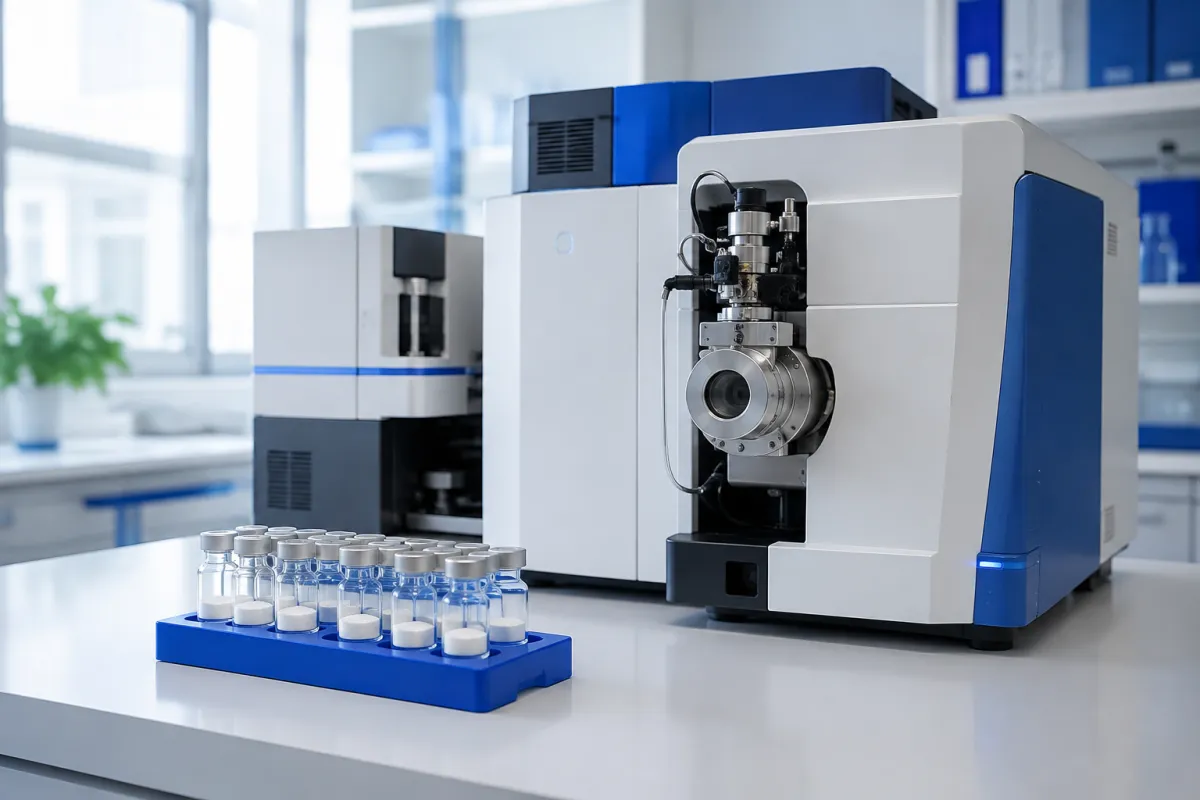 Illustration: a mass spectrometer used to confirm the identity of a synthetic peptide.
Our own batch reports are published in the COA library and can be checked with the COA verification tool.
Frequently asked questions
Is SS-31 the same as elamipretide?
Yes. SS-31 is the laboratory code for the peptide whose international nonproprietary name is elamipretide. PubChem (CID 11764719) also lists the synonyms MTP-131 and Bendavia 14. Forzinity is the US brand name of elamipretide hydrochloride, approved by the FDA under NDA 215244 15. All of these names refer to the same sequence, D-Arg-Dmt-Lys-Phe-NH2.
Is elamipretide approved by the FDA?
Yes, under accelerated approval. On 19 September 2025 the FDA approved Forzinity (elamipretide) for a labelled indication in Barth syndrome, based on an intermediate clinical endpoint 15 16. The approval requires a randomised, placebo-controlled confirmatory trial, and the FDA may withdraw the approval if that trial does not confirm the predicted effect 15. The confirmatory trial, 4TAZPower, was recruiting in 2026 18.
Is SS-31 included in the Australian Register of Therapeutic Goods?
No. A search of the ARTG on 28 September 2026 returned no entry for elamipretide or its US brand name, Forzinity 20. The TGA’s April 2026 advisory defines unapproved peptide products as goods not included in the ARTG 22. A US approval does not create an Australian registration. This article describes regulatory status only.
Is SS-31 on the WADA Prohibited List?
SS-31 and elamipretide are not named in the 2026 WADA Prohibited List, which came into force on 1 January 2026 19. The list also prohibits substances through general categories, so the absence of a name is not the same as a ruling. Check the current WADA Prohibited List or our anti-doping status table.
How many human trials of elamipretide are registered?
When searched on 28 September 2026, ClinicalTrials.gov listed 30 records naming elamipretide, MTP-131, SS-31 or Bendavia as an intervention, from phase 1 to phase 4, 28 of them sponsored by Stealth BioTherapeutics 17. They cover heart, kidney, eye and mitochondrial disease populations. Published trials include EMBRACE STEMI, MMPOWER-3 and TAZPOWER 5 8 9.
References
- Zhao K, Zhao GM, Wu D, et al. Cell-permeable peptide antioxidants targeted to inner mitochondrial membrane inhibit mitochondrial swelling, oxidative cell death, and reperfusion injury. Journal of Biological Chemistry. 2004;279(33):34682-34690. doi:10.1074/jbc.M402999200. PMID: 15178689. [cell, isolated mitochondria and ex vivo heart study]
- Birk AV, Liu S, Soong Y, et al. The mitochondrial-targeted compound SS-31 re-energizes ischemic mitochondria by interacting with cardiolipin. Journal of the American Society of Nephrology. 2013;24(8):1250-1261. doi:10.1681/ASN.2012121216. PMID: 23813215. PMCID: PMC3736700. [biochemical and rat study]
- Mitchell W, Ng EA, Tamucci JD, et al. The mitochondria-targeted peptide SS-31 binds lipid bilayers and modulates surface electrostatics as a key component of its mechanism of action. Journal of Biological Chemistry. 2020;295(21):7452-7469. doi:10.1074/jbc.RA119.012094. PMID: 32273339. PMCID: PMC7247319. [biophysical and computational study]
- Chavez JD, Tang X, Campbell MD, et al. Mitochondrial protein interaction landscape of SS-31. Proceedings of the National Academy of Sciences of the USA. 2020;117(26):15363-15373. doi:10.1073/pnas.2002250117. PMID: 32554501. PMCID: PMC7334473. [cross-linking mass spectrometry study]
- Gibson CM, Giugliano RP, Kloner RA, et al. EMBRACE STEMI study: a Phase 2a trial to evaluate the safety, tolerability, and efficacy of intravenous MTP-131 on reperfusion injury in patients undergoing primary percutaneous coronary intervention. European Heart Journal. 2016;37(16):1296-1303. doi:10.1093/eurheartj/ehv597. PMID: 26586786. [phase 2a randomised controlled trial]
- Butler J, Khan MS, Anker SD, et al. Effects of elamipretide on left ventricular function in patients with heart failure with reduced ejection fraction: the PROGRESS-HF phase 2 trial. Journal of Cardiac Failure. 2020;26(5):429-437. doi:10.1016/j.cardfail.2020.02.001. PMID: 32068002. [phase 2 randomised controlled trial]
- Karaa A, Haas R, Goldstein A, et al. Randomized dose-escalation trial of elamipretide in adults with primary mitochondrial myopathy. Neurology. 2018;90(14):e1212-e1221. doi:10.1212/WNL.0000000000005255. PMID: 29500292. PMCID: PMC5890606. [phase 1/2 randomised controlled trial]
- Karaa A, Bertini E, Carelli V, et al. Efficacy and safety of elamipretide in individuals with primary mitochondrial myopathy: the MMPOWER-3 randomized clinical trial. Neurology. 2023;101(3):e238-e252. doi:10.1212/WNL.0000000000207402. PMID: 37268435. PMCID: PMC10382259. [phase 3 randomised controlled trial]
- Reid Thompson W, Hornby B, Manuel R, et al. A phase 2/3 randomized clinical trial followed by an open-label extension to evaluate the effectiveness of elamipretide in Barth syndrome, a genetic disorder of mitochondrial cardiolipin metabolism. Genetics in Medicine. 2021;23(3):471-478. doi:10.1038/s41436-020-01006-8. PMID: 33077895. PMCID: PMC7935714. [phase 2/3 randomised crossover trial with open-label extension]
- Ehlers JP, Hu A, Boyer D, et al. ReCLAIM-2: a randomized phase II clinical trial evaluating elamipretide in age-related macular degeneration, geographic atrophy growth, visual function, and ellipsoid zone preservation. Ophthalmology Science. 2025;5(1):100628. doi:10.1016/j.xops.2024.100628. PMID: 39605874. PMCID: PMC11599447. [phase 2 randomised controlled trial]
- Shirley M. Elamipretide: first approval. Drugs. 2026;86(3):377-383. doi:10.1007/s40265-025-02269-8. PMID: 41335372. [narrative review]
- Kloner RA, Hale SL, Dai W, et al. Reduction of ischemia/reperfusion injury with bendavia, a mitochondria-targeting cytoprotective peptide. Journal of the American Heart Association. 2012;1(3):e001644. doi:10.1161/JAHA.112.001644. PMID: 23130143. PMCID: PMC3487333. [animal and cell study]
- Sabbah HN, Gupta RC, Kohli S, et al. Chronic therapy with elamipretide (MTP-131), a novel mitochondria-targeting peptide, improves left ventricular and mitochondrial function in dogs with advanced heart failure. Circulation: Heart Failure. 2016;9(2):e002206. doi:10.1161/CIRCHEARTFAILURE.115.002206. PMID: 26839394. PMCID: PMC4743543. [dog study]
- PubChem. Elamipretide, compound summary, CID 11764719. https://pubchem.ncbi.nlm.nih.gov/compound/11764719. Accessed 28 September 2026.
- US Food and Drug Administration. NDA 215244 accelerated approval letter, Forzinity (elamipretide), 19 September 2025. https://www.accessdata.fda.gov/drugsatfda_docs/appletter/2025/215244Orig1s000ltr.pdf. Accessed 28 September 2026.
- US Food and Drug Administration. Forzinity (elamipretide) prescribing information, revised September 2025. https://www.accessdata.fda.gov/drugsatfda_docs/label/2025/215244s000lbl.pdf. Accessed 28 September 2026.
- ClinicalTrials.gov. Search of interventions for elamipretide, MTP-131, SS-31 or Bendavia (30 records). https://clinicaltrials.gov/search?intr=elamipretide. Accessed 28 September 2026.
- ClinicalTrials.gov. NCT07531251: Clinical trial in patients with Barth syndrome (4TAZPower). https://clinicaltrials.gov/study/NCT07531251. Accessed 28 September 2026.
- World Anti-Doping Agency. Prohibited List 2026 (in force 1 January 2026). https://www.wada-ama.org/en/prohibited-list. Accessed 28 September 2026.
- Therapeutic Goods Administration. Australian Register of Therapeutic Goods (ARTG) search. https://www.tga.gov.au/resources/artg. Accessed 28 September 2026.
- US Food and Drug Administration. Drugs@FDA: NDA 215244, Forzinity. https://www.accessdata.fda.gov/scripts/cder/daf/index.cfm?event=overview.process&ApplNo=215244. Accessed 28 September 2026.
- Therapeutic Goods Administration. Understanding your responsibilities when importing, compounding and supplying unapproved peptide products (safety advisory, 13 April 2026). https://www.tga.gov.au/safety/safety-monitoring-and-information/safety-alerts/understanding-your-responsibilities-when-importing-compounding-and-supplying-unapproved-peptide-products. Accessed 28 September 2026.
- Chatfield KC, Sparagna GC, Chau S, et al. Elamipretide improves mitochondrial function in the failing human heart. JACC: Basic to Translational Science. 2019;4(2):147-157. doi:10.1016/j.jacbts.2018.12.005. PMID: 31061916. PMCID: PMC6488757. [ex vivo human tissue study]
- Allen ME, Pennington ER, Perry JB, et al. The cardiolipin-binding peptide elamipretide mitigates fragmentation of cristae networks following cardiac ischemia reperfusion in rats. Communications Biology. 2020;3(1):389. doi:10.1038/s42003-020-1101-3. PMID: 32680996. PMCID: PMC7368046. [rat study]
Reference material. Certified Research Peptides supplies SS-31 for laboratory research, with a batch certificate of analysis: SS-31.
Check the lab report
Every published certificate of analysis names its lab, lot and test date. For laboratory research use only.